
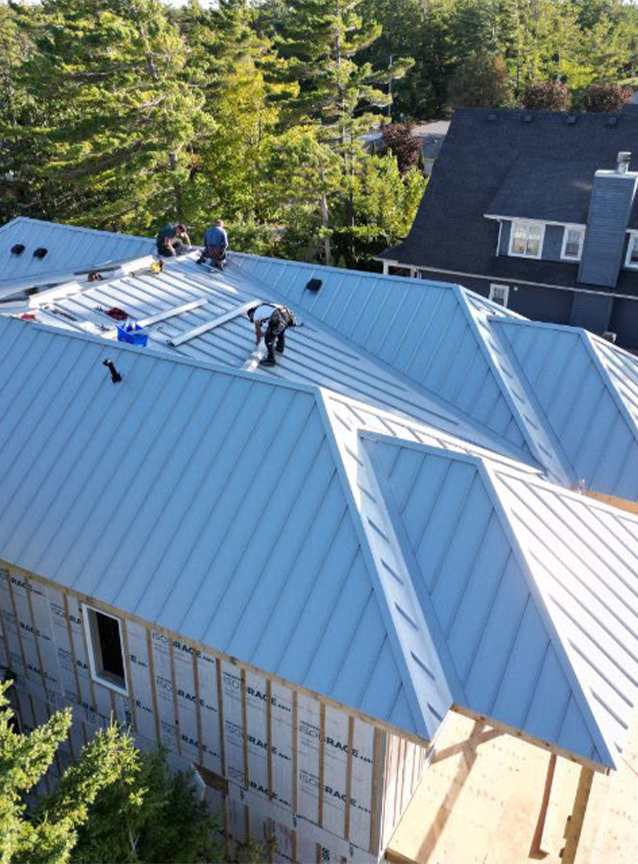
For commercial self-storage facilities, the roof is a major part of the building envelope and one of the areas where material selection can have long-term implications for maintenance, performance, and operating costs.
That is why trapezoidal standing seam metal roofing has become a common choice for commercial storage facilities. Designed to provide durable weather protection while keeping installation and ongoing maintenance straightforward, standing seam systems offer a practical roofing solution for projects across Canada.
For general contractors and facility owners evaluating roofing options, the key consideration is not simply the initial material cost. It is how the roof will perform over years of exposure to Canadian weather and day-to-day facility operations.
Built for Canadian Weather
Self-storage facilities need roofing systems that can handle changing conditions throughout the year. Snow, rain, temperature fluctuations, wind, and freeze-thaw cycles can all place demands on a commercial roof.
A trapezoidal standing seam metal roof is designed with durability and weather resistance in mind. Its interlocking seam design helps create a continuous roofing system with fewer exposed fasteners than many traditional roofing assemblies.
For facility owners, that means a roofing system designed to provide dependable protection through changing seasonal conditions while reducing potential maintenance concerns over time.
Lower Maintenance Requirements
Roof maintenance can become a significant operational consideration for facility owners, particularly as a property ages.
Traditional flat roofing systems can require ongoing inspections, repairs, and attention to issues such as membrane deterioration, ponding water, or weather-related damage. Asphalt-based roofing materials can also require maintenance and eventual replacement as they age.
Metal roofing offers a durable alternative with relatively straightforward maintenance requirements. With the right material, installation, and detailing, a commercial standing seam roof can provide long-term performance without the same level of routine upkeep associated with some conventional roofing systems.
For owners managing multiple facilities, reducing maintenance demands can also simplify long-term property management. Ongoing facility maintenance and repairs can then focus on the areas that need it most.
Efficient Installation
For commercial construction projects, roofing installation has to work within the broader project schedule.
Standing seam metal roofing systems can be fabricated and installed efficiently when properly coordinated with the building design and other trades. For developers and general contractors, that can help keep construction moving while minimizing unnecessary disruption to the overall schedule.
Working with experienced standing seam manufacturers with trapezoidal profiles also allows roofing components to be produced to project-specific requirements, supporting more accurate coordination between design, fabrication, and installation.
Consider the Lifecycle Cost
The lowest upfront roofing price does not necessarily result in the lowest overall cost.
When evaluating a commercial roofing system, project teams should consider the expected service life, maintenance requirements, repair frequency, replacement costs, and the impact of future work on the facility.
A durable metal roof can make sense as a long-term investment when those factors are considered together. While the initial cost may differ from traditional flat or asphalt roofing options, reduced maintenance and a longer service life can contribute to lower lifecycle costs over the life of the building.
For facility owners, that broader cost perspective can be more useful than comparing material prices alone.
Why Standing Seam Works for Self-Storage
Self-storage facilities are designed around efficiency, durability, and long-term operation. The roofing system should support those same priorities.
A trapezoidal standing seam metal roof provides a combination of weather performance, durable construction, efficient installation, and manageable maintenance requirements, making it well suited to commercial storage applications.
At NeoTech Construction, roofing is part of a larger single-source approach to self-storage construction. From custom sheet metal fabrication and project-specific manufacturing to delivery and installation, the team works with developers, owners, and general contractors to coordinate roofing requirements alongside the broader facility build.
For a new facility, expansion, or conversion project, choosing the right roofing system early can help support both construction efficiency and long-term performance.
Planning a commercial self-storage project? Contact NeoTech Construction to discuss your roofing requirements or request a custom quote for your facility.